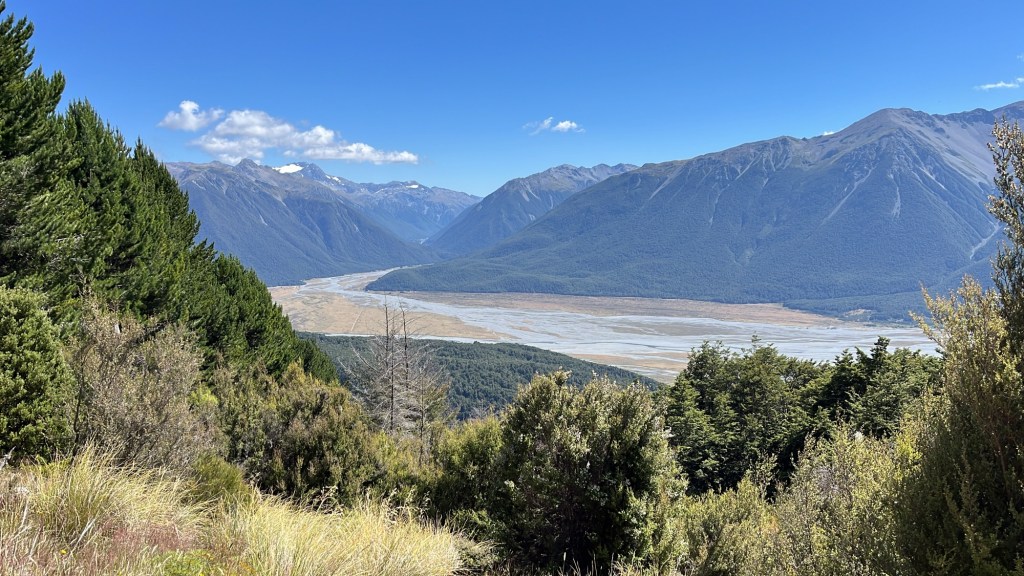
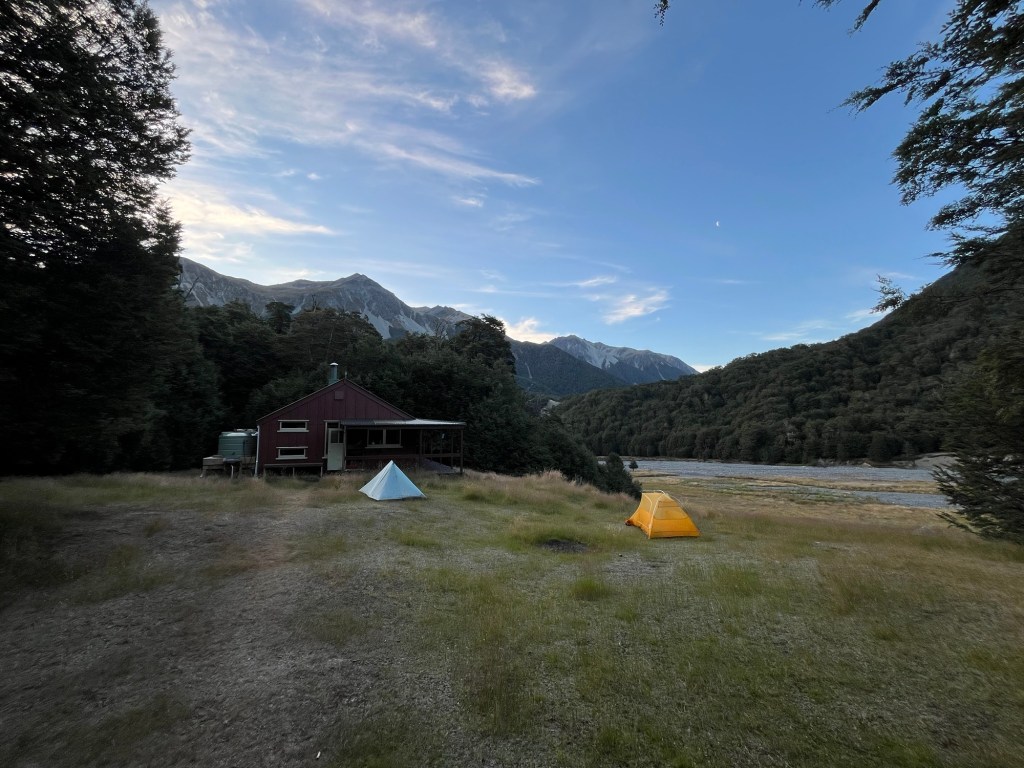
From Arthur’s Pass was a three day section along the Harper River track to Lake Coleridge. I started the section alone, but quickly reunited with Clare, Rachel, and Andy, three Brits who I’d met in the Richmonds and Nelson Lakes. We passed the night at Hamilton hut. I slept in my tent outside of the hut, but moved into the cozy hut to shelter from sandflies and enjoy the old hut copies of National Geographic the next morning.
Back home, my favorite way to pass a morning is with a book and cup of coffee on the couch. There’s no better time to be absorbed written word than when my head is clear and caffeine sharpens my focus. On the trail, most hikers like to get moving around 7-8 am, leaving the huts empty until the afternoon. I loved to take a short day and spend a few extra hours in an empty hut reading and sipping instant coffee, just like home.
Just over a month in from the my start, I was becoming aware of a looming deadline to finish the trail. I had loose plans to meet my ole pal, Justin Newman, in Nepal come early March. Those plans were crystallizing as we set a date to meet in Kathmandu on my birthday, March 9th. For the first time since I’d started walking from Ship Cove, I felt a weak urgency to reach Southland in the next month. I’d never been hard set on making it to the official end of the trail in Bluff, but there were places and tracks I wanted to get to along the way.
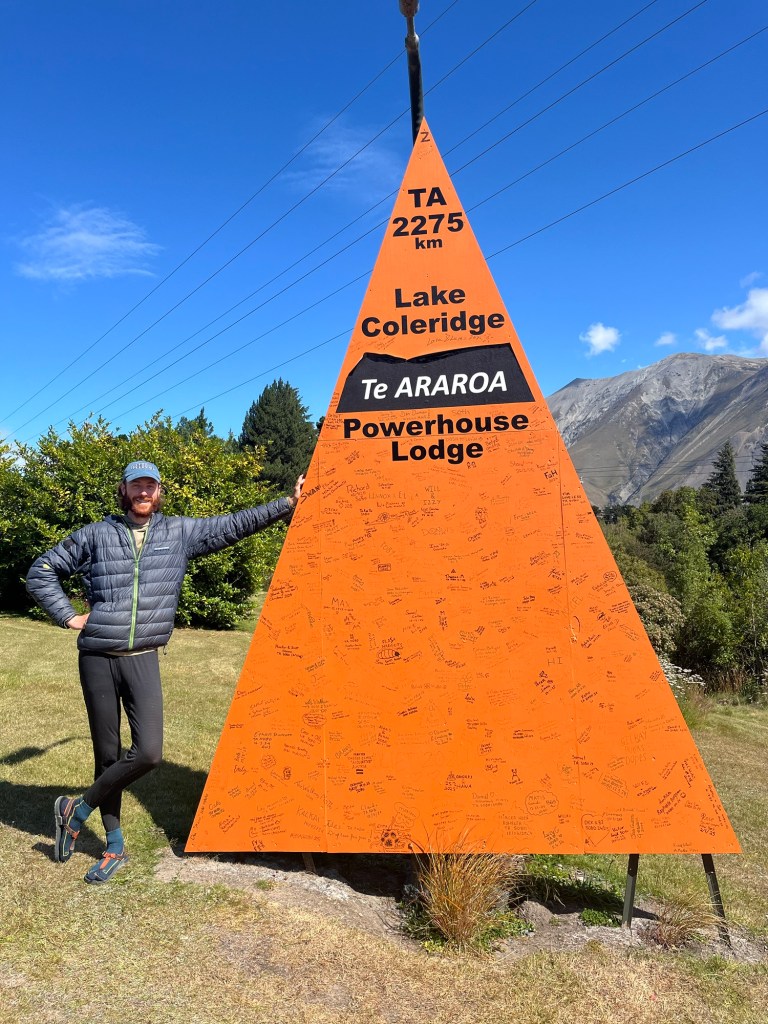
I made it out of the Harper River section after a night on Lake Coleridge. At the end of this section is Lake Coleridge Lodge, a historic lodge on the south side of the lake now run by a sweet couple from Christchurch with help from their daughter. About 15 hikers converged on the lodge for the night. We were all greeted with a can of Coke and a homemade cookie. I feasted on hot chips (French fries), waffles, and ice cream, while planning the next section with Clare and Rachel.
We decided to hitch and shuttle around the next section between the Rakaia and Rangitata rivers in order to reach the Southland and Fjordland sooner, and avoid potential shuttle logistics to get around the Rangitata. These rivers typically need to be shuttled around, requiring 100s of kilometers of driving. A dry summer in Canterbury had left the Rangitata with record low flows and many hikers were wading across.
After a shopping for the next section in the small farming town of Methven, I landed two easy hitches to Geraldine, another small Canterbury town where we could get a shuttle back into the Southern Alps to start the next section, the Two Thumbs track from Mesopotamia Station to Lake Tekapo.
I’ve mentioned hitch hiking many times, as it was my main method of transport while on the South Island. Hitching in NZ was exceptionally easy and almost always enjoyable. My favorite rides were with locals. With tramping being a common pastime amongst Kiwis, most are happy to pick up a fellow tramper looking for a lift down the road. It’s an exhilarating moment when a car pulls over and the excitement of success circulates through you. I had some wonderful conversations. Some standouts- John from Nelson, an 82 year old inventor who’s lived in Zambia, South Africa, the US, the UK, and now NZ; he invented modern inkjet technology used in printers. Scott and Gabrielle from Richmond, humanitarian workers who spent 8 years in the Dolpo of northwest Nepal; they shared stories that evoked imagery from Peter Mathieson’s book about travel in that region, The Snow Leopard. The British professor from Methven, the punk rocker from Gore, the ex-con from Invercargill, the tow truck driver from Te Anau. They all welcomed me into their vehicles and helped me get into town or back to the trail. I sure stacked up a lot of karmic debt along the way. If you’re reading this, do me a favor and pick up a hitch hiker next time you can. Who knows, it might be me.
 johnswords0.blog
Leave a comment